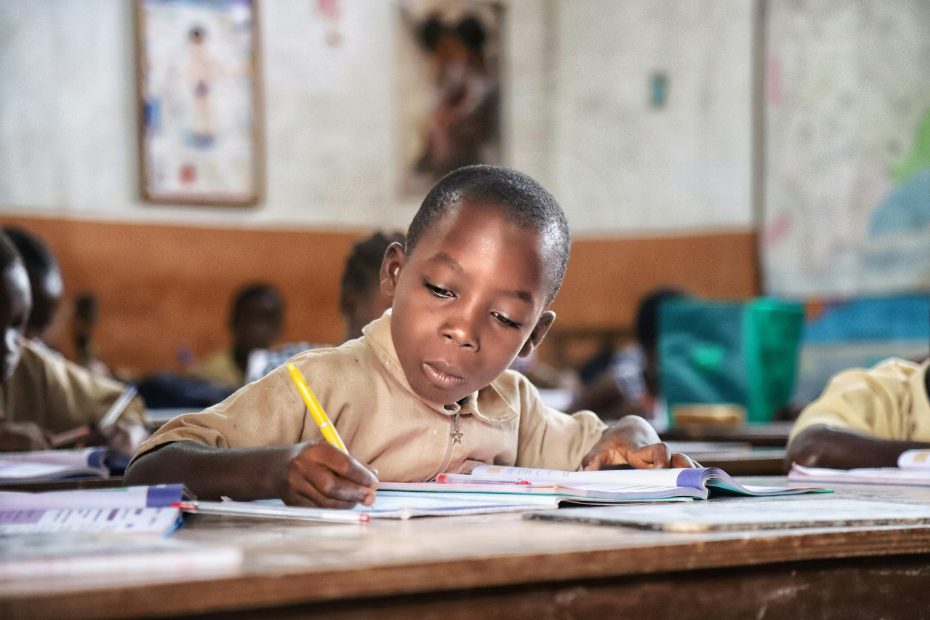
The United Nations Convention on the Rights of the Child (1989) states that children have rights that are bespoke to them. These rights apply equally to children around the world, including children who have migration backgrounds. However, while migrant children have the potential to make a huge and positive contribution to their schools and societies, they also often face barriers when trying to claim these rights. This includes their rights to, in and through education (UNCRC Articles 28 and 29), their rights to identity and freedom of expression (Articles 8 and 13), and their right to have their views taken into consideration on any matter that affects them (Article 12).
Over the past decade, I have been doing research that explores migrant children’s experiences of primary school in the Western Cape of South Africa (Hanna and Kucharczyk, 2021; Hanna, 2022, 2023). From the beginning, I was especially concerned with the idea of ‘inclusion’: the extent to which migrant children are – and feel themselves to be – included in the classroom, reflected in the curriculum and acknowledged and valued in school life. I realised quickly when I started doing this work that there was not a lot of research that focused on the voices of younger children, and especially of migrant children, not only in South Africa but also in the wider region. I wondered why that was when migration was a topic that was quite a big focus of research globally, and frequently made the headlines in South Africa (Morreira and Chekero, 2022), and when I had thought the world had already moved on from the idea of children as simply ‘human becomings’ towards the conceptualisation of them as fully-fledged ‘human beings’ (Invernizzi and Williams, 2008). What I realised over time was that migrant children in South Africa face multiple barriers and discriminations: not only are they part of a group – migrants – that receives often negative press in South Africa (like in many other countries), but they are also children in what remains a paternalistic society, even arguably a primarily paternalistic world. Therefore, it is often assumed that they are too young, too ignorant or too lacking in agency to be able to comment on their own lives.
Reconsidering how to view children
My work with children convinces me that we should challenge these assumptions. I propose that migrant children should be considered as ‘experts’ in their own lives, with a wealth of knowledge, understanding, and insights into their own experiences and those of others. So if we truly want education to be relevant to all children, then we need to find ways of including them in making decisions at and about school. For educators, this will mean being reflective, creative and adaptable in the teaching approaches and materials we use, trying where possible to engage with what the children know and are interested in; for researchers, this includes a need to be equally reflective, creative and adaptable in the research methods we use, always mindful that methods should be ‘fit for purpose’ (Kara, 2020) and should be an effective way of answering our research questions.
I was recently invited to be a discussant at a symposium at the British Education Research Association Annual Conference, which was held in Birmingham in September 2023. The symposium ran as part of the Global Childhoods Research Group based at the University of Nottingham. The speakers in this symposium looked at methodological and ethical dilemmas and discoveries in researching childhoods in diverse contexts and included research from South Africa, China and Greece. I was struck by two things when listening to the thought-provoking presentations. Firstly, the importance of considering the child as an individual, rather than as part of the group known as ‘children’, who have multiple identities that need to be considered, whether in a ‘collectivised’ society or in what might be called an ‘individualised’ society. Secondly, the importance of representation of children, an idea considered often in the scholarship on ‘voice’ and ‘representation’ of marginalised groups, especially in work on research ethics and visual methods.
But these are not only scholarly arguments; there are also aspects of them that are legally mandated. While there is important debate going on about the culturally situatedness of ideas of human rights and international human rights law, work with children should be focused on their ‘best interests’ (Article 3 UNCRC), legislation which almost all countries have signed up to. Nevertheless, the interpretation of ‘best interests’ needs to be rigorous and itself involves children in its definition.
We continue to need researchers today who are willing to put the extra effort into trying to engage with children in the ways that the children themselves prefer and that work best for them, to research the issues that are most important to and for them, and to be sensitive to the stories that we tell about them in spaces where they are not found – in South Africa, on the African continent and beyond.
- Helen Hanna, University of Manchester
This blog is based on a research seminar I gave for GLOCCRIN on 20th November 2023 and a talk I gave as a discussant at the British Education Research Association Conference on 14th September 2023.