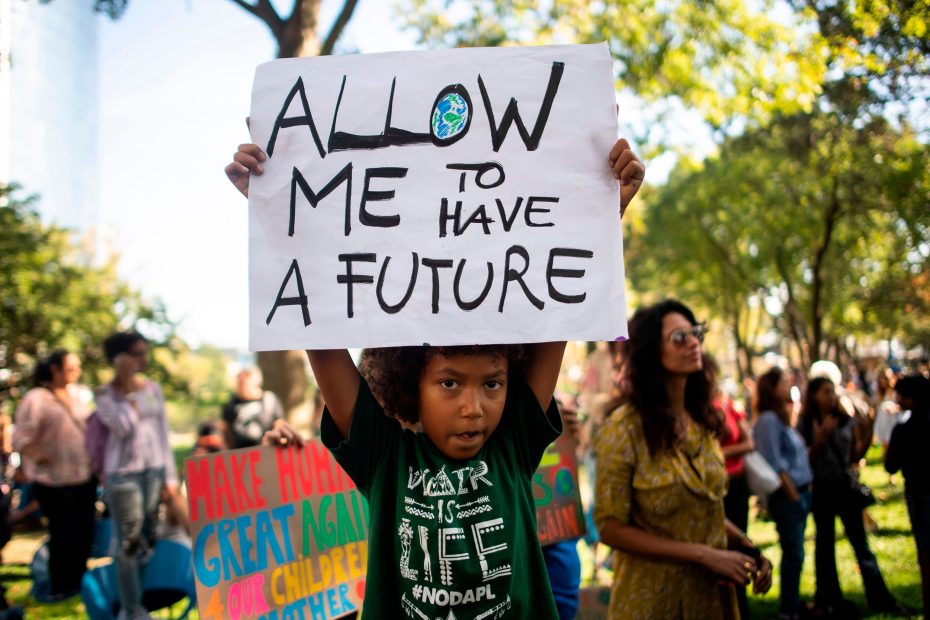
It is increasingly being acknowledged that climate change disproportionately harms children, including threatening their basic rights to life, education, food, water, health, and a safe environment. This is compounded by the fact that climate risks not only appear faster but have also become more severe than before. While climate change tends to particularly harm the most vulnerable children first, hardest, and longest (UNCRC Committee on Climate Change, 2023; IPCC, 2021), it generally widens the prevailing socio-economic inequalities and poverty, in addition to countermanding the gains made towards children’s welfare. Thus, concerted efforts are needed to put children at the centre of the global response to the climate crisis. Through this, not only will their health and well-being be protected, but they will also build stronger communities and more resilient economies.
It is worth noting that children have heightened behavioural, developmental, and physical vulnerabilities. They are among the least empowered to exercise their rights to information, free expression, and to enjoy justice when their rights are violated (UNICEF, 2021; 2023; ACERWC, 2024). While air pollution is responsible for nearly 30% of all deaths in the first month after birth in Sub-Saharan Africa and South Asia, for instance, it is unfortunate that climate change policy, financing, discourses, and media coverage often fail to appreciate the fact that children’s bodies and minds are uniquely fragile. And, although climate change is a child rights crisis, this perspective calls for further unpacking, given that children globally are affected differently. For example, while the top 50% of states by income account for 86% of total carbon emissions, children in developing countries bear the brunt of losses and damage to sectors such as education and health (UNICEF, 2021).
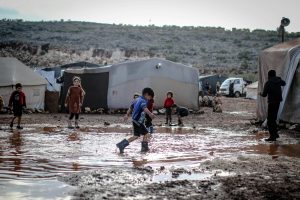
Accordingly, out of the 33 countries worldwide ranked as ‘extremely high risk’ for children, a whopping 25 of them are in Africa. It could be argued, therefore, that climate change is an African child-rights crisis. Climate change-related disasters—floods and droughts—most affect the rights of the child in Africa (ACERWC, 2024). Of the 19.7 million child displacements due to floods worldwide between 2016 and 2021, Somalia, Ethiopia, South Sudan, Nigeria, and Sudan ranked among the top 10 countries by absolute numbers. Similarly, among the 1.3 million child displacements due to droughts globally between 2017 and 2021, Somalia, Ethiopia, Angola, Burundi, Madagascar, and South Sudan were among the top 10 (UNICEF, 2023).
The compound effect of drought and COVID-19 on the rights of children, and girls in particular, in Africa has also been severe. Reportedly, economic hardships have led to an increase in cases of female genital mutilation and a higher rate of girls dropping out of school in Somalia, South Sudan, and Kenya. Almost 80% of persons displaced due to climate-induced disasters are women and girls. The impacts of climate change on women and girls with respect to safety, sanitation, health, nutrition, and educational attainment are grave (ACERWC, 2024). For example, where drought leads to a shortage of locally available water, the distances that women and girls travel to fetch water increase. Similarly, such a situation exposes them to the risk of violence (UN Convention to Combat Desertification, 2022). Furthermore, climate change has a disproportionate impact on children with disabilities, those on the move and/or separated from their families, and indigenous children (OHCHR, 2017).
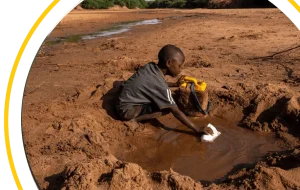
Apparently, marginalised children bear a disproportionate burden of the consequences of inaction on the environment, thereby infringing on the principle of non-discrimination (OHCHR, 2017). Climate change impacts and projected risks require that decision-making, funding, and investment be undertaken on a large scale to achieve climate-resilient development. Employing a rights-based approach to climate change, involving identifying rights-holders and their entitlements, as well as the corresponding duty-bearers and their obligations, is imperative. Governance approaches that are inclusive, equitable, and just should be embraced, including engaging with children to draw on their deep knowledge of who and what perpetuates their injustices and to listen to their needs and solutions.
Equally important is collecting disaggregated data to identify the differential effects of environmental harm on children, paying particular attention to the groups most at risk, and implementing sound measures and policies as required. Significantly, however, more studies on climate change and child rights in Africa should be conducted (ACHPR, 2014). As a critical enabler, education should be reformed to address a myriad of climate and/or environmental crises, including by increasing children’s knowledge through relevant programmes in schools. Specifically, demonstrating how the right to education is threatened by climate change and taking appropriate measures to reverse this should be emphasised. Furthermore, there should be recommendations on engaging with greening schools, learning, capacity, and communities (The UNESCO Greening Education Partnership, 2022).
On their part, individual states must develop legislation, policies, and practices that address the right to education in the face of climate change. In addition, there is a need to develop effective early warning systems to promote child rights in the context of climate-induced disasters. Finally, it is worth reiterating that increasing climate finance for mitigation and adaptation is critical to promoting climate justice.
Benard Nyatuka
GLOCCRIN Lead Person- East Africa, Associate Professor of Comparative & International Education, Department of Educational Foundations, School of Education, Kisii University, Kenya. Email: bnyatuka@kisiiuniversity.ac.ke