State violence is ubiquitous and can be witnessed almost everywhere in the world. The wars in Europe, and the Middle East, violence in Asia and the other pockets of violence across African countries can be classified as state violence since these are perpetuated by state machinery. Most of these wars show that there is hardly a place across the world where violence is not being sponsored by the state or some of its agents. State violence, therefore, is the classification of violence that is initiated by the state, supervised by the state, executed by the state, and every nemesis arising from it tends to be defended by the state.
In West Africa, state violence is seen in almost all the geographical member states’ countries. The governments in Nigeria, Chad, Cameroon, and Niger had been combating Boko Haram, Islamic State and unknown gunmen terrorism for almost 20 years. This tension should have been quelled and nipped to bud within a few weeks, but it has lasted till date. There are schools of thought with the opinion that the state’s involvement in the fight against terrorism in West Africa does not have the political will to quell the tension. Several resources in terms of military aid and budgets are mostly diverted for other ignoble egocentric uses. This in a way shows that the state is deriving some sort of pleasure in the prolonged tensions.
This implies that some political and economic connections sustain the violence perpetuated by some state officials. Communities in conjunction with the government in some cases had engaged in peacekeeping, but the effects lacked the utmost political will to end the insurgencies and quench the effects of the violence. Therefore, to what extent has state violence and peacekeeping affected the rights of children in West Africa? Is there any hope of restoring the children’s rights eroded by state violence in the short term? Broken window and ‘tyre-burning’ theories are interrogated to explain the menace of state violence and peacekeeping strategies on children’s rights in West Africa.
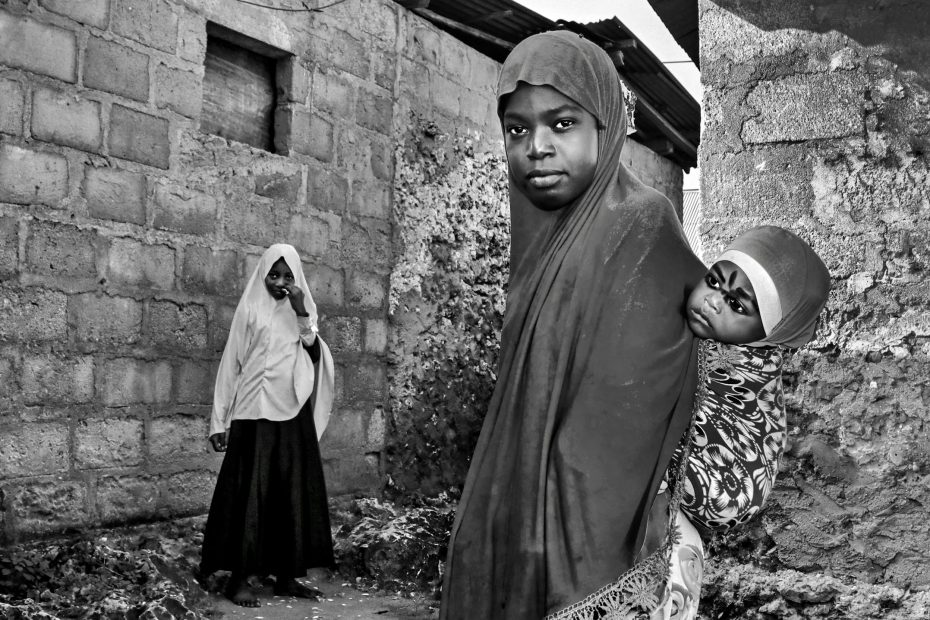
A lot of lives have been lost and properties worth millions of dollars destroyed. The easy targets and prominent victims are women and children. The rights of children especially the right to life, education and the right to associate had been grossly violated to the extent that the trauma must have taken the age of the children back to the stone age of development (they have lost touch with modern developments). Several children had been forced to abandon schooling for safety. For instance, in northern Nigeria, the percentage of out-of-school children had increased in the epicentre of terrorism. School girls are the most prominent target and are forced into early motherhood in the insurgency hand, while the kidnapped male children are trained as future terrorists or used as bait for ransom or criminal prisoner exchange.
The economic resources should be ordinarily expended on developmental projects such as good roads, improved healthcare facilities, and portable and clean water supply. Some include improved housing facilities for the people, good and affordable education, safety within the society and the highway, among others, are being partly diverted to solve the violence. Nevertheless, despite the financial commitments by the state to resolve violence, it remains an integral part of society. This is due to a lack of political will. Furthermore, the financial commitments are usually inadequate to provide sufficient military hardware needed to end the internal insurrections or external aggressions. The corrupt nature of some state officials also makes the violence more pronounced and prolonged because they divert the little resources allocated to the military and other peacekeepers to stop the tensions. This act of resource diversion creates a broken window and eventually leads to the ‘tyre-burning’ phenomenon.
Broken window and tyre-burning theories provide leeway to the menace of state violence and peacekeeping strategies on children’s rights in West Africa. Broken window theory depicts a scenario of neglect by government, or community members to a social menace until it becomes a big unquenchable scenario. This could breed terrorism or finance a criminal violent occurrence. Tyre burning theory, on the other hand, explains the phenomenon of neglect by the government to the plight of the people which led to soft protests and eventually a hard protest characterized by violence and burning of tyres as the signature of the protest. This violence affects mostly children and their right to existence and development.
Therefore, state violence is a product of state negligence to the plight of the people and the aggrieved people become vulnerable to criminal elements that escalate and utilise the loophole created by the government. Therefore, in the short term, there is little or no hope of restoring the children’s rights eroded by state violence. This is because the extent of damage especially to their educational rights had brought them backward for more than five decades. The trauma and negative instinct inflicted on the children may be a lifelong stigma if there is no proper rehabilitation or still, a long-term symptom if proper and continuous care is implored.
In conclusion, West African countries are becoming too fragile due to long-sustained state violence, high levels of poverty, corruption, low premium on free education, quick reversal of democratic principles to autocratic regimes and low political will to sustain little development. Also, the poor state response to violence and the diversion of military resources are all symptoms of state violence. Therefore, the current right of children and it future in West Africa is in jeopardy.
- Opeyemi Idowu Aluko GLOCCRIN Lead Person-West Africa, IFRA fellow, Ajayi Crowther University Oyo, Oyo State Nigeria aluko@acu.edu.ng